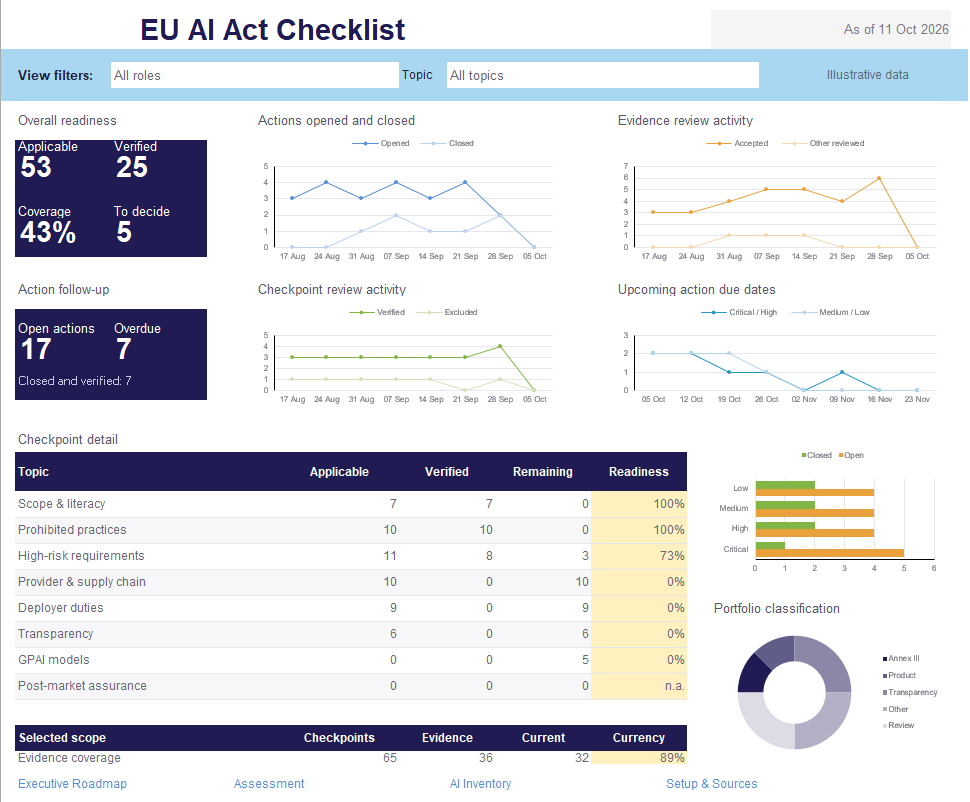
An EU AI Act checklist should start with a named system and a specific intended use. Record where it is offered or used, who supplies it, who operates it and whose decisions it affects. A product name or the label “AI” rarely establishes the legal classification. Use the official text and current implementation timetable to assess applicability. Different provisions and transitional arrangements can have different dates.
Establish the role before assigning obligations
Take an organisation considering software that sorts job applications. Document whether the supplier markets the system for recruitment, what the tool actually does, who controls its intended purpose and what discretion the hiring team retains. Identify the provider and deployer roles under the Act and check whether changes to the product or its use could change those roles. Have the appropriate specialist evaluate the relevant employment-related entry and conditions in the current legislation. Keep the reasoning, source and decision maker with the record.
Compare the pilot and production uses
During a pilot, recruiters use the software to organise application files. The production proposal would rank applicants and hide low-ranked profiles from default view. Capture the proposed change, how it affects access to opportunities, what instructions staff receive, how they can review hidden profiles and what evidence the supplier provides. The two configurations can present different classification and oversight questions. A checkbox copied from the pilot leaves these questions unanswered.
Link the organisation’s AI governance assessment for ownership, review authority and change approval. A related AI risk assessment can describe error scenarios and affected groups. If personal data is processed, assess data protection duties alongside the AI Act work and consider a data protection impact assessment where its conditions apply.
Record a go-live decision with conditions
For each relevant provision identify its reference, applicability date, responsible party, evidence source and unresolved questions. Keep prohibited-practice screening, transparency and any high-risk requirements identifiable as separate decisions. Where the classification or transition rule remains open, assign a named reviewer and a deadline before the relevant deployment decision. Reassess the row when intended use, supplier terms, operating geography or the law changes.