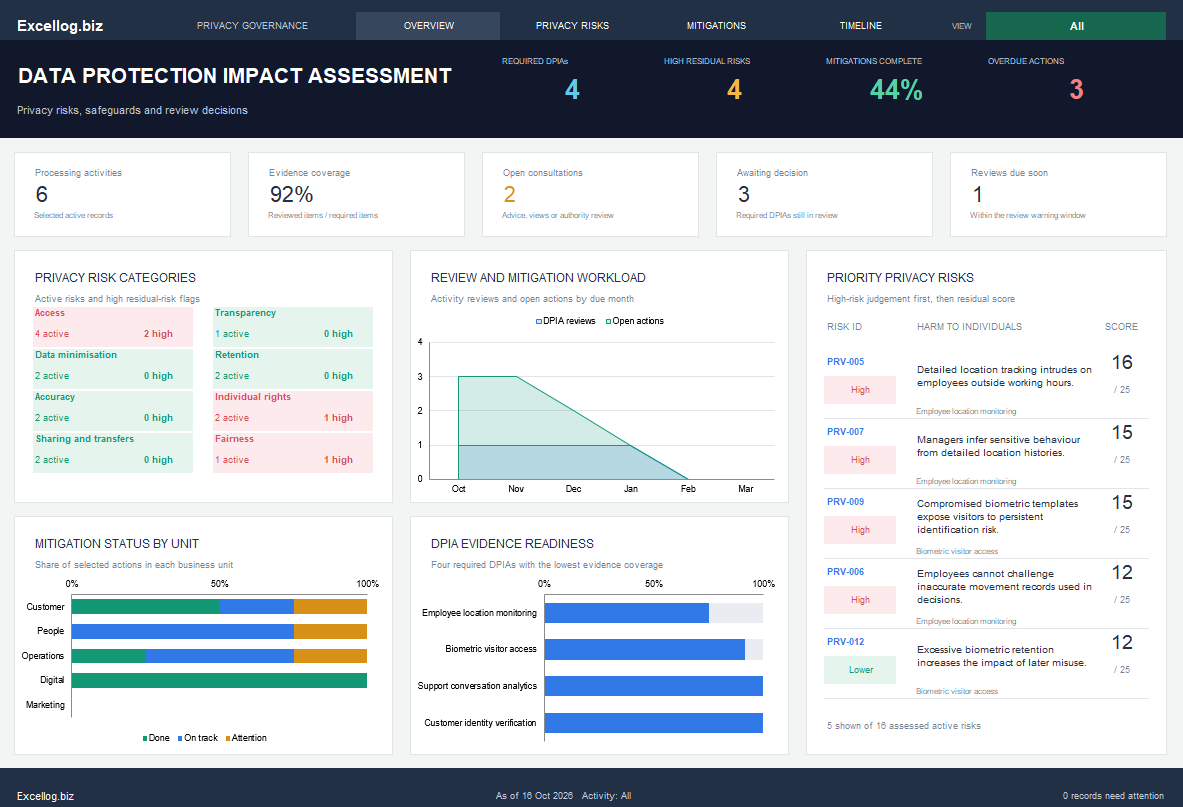
A data protection impact assessment (DPIA) examines how proposed personal data processing could affect people. Under Article 35 of the EU GDPR, a controller must carry out a DPIA before processing that is likely to result in high risk to individuals’ rights and freedoms. Record the screening decision, the relevant jurisdiction and the reasons for your conclusion. Consider applicable supervisory authority lists when deciding whether a DPIA is required.
Follow the data from collection to deletion
Identify the purpose and proposed operations, data sources, people affected, recipients, retention and deletion arrangements. Explain why the processing is necessary and proportionate to its purpose. Describe the possible harm from a mistaken inference, unauthorised disclosure or other failure and the practical effect of proposed safeguards. Where a data protection officer is designated, seek their advice. Record their views alongside the decision.
Reconsider a proposed monitoring design
A housing provider proposes sensors in 120 apartments to detect leaks. The initial design sends minute-by-minute readings to a vendor and keeps them for one year. Residents ask whether the history could reveal occupancy patterns. Engineering tests an alternative that processes readings locally and sends a leak alert with a device reference only when intervention is needed. In a trial covering ten test units, reviewers check whether alerts arrive promptly and which staff can resolve a device reference to an address.
Record the original concern, the proposed alternative and the evidence from that trial. The controller still needs to evaluate the risks of incorrect alerts, unnecessary entry and excessive access. Assign responsibility for checking the retention rule and verifying who can view the address link. A trial establishes limited evidence within its scope.
Before rollout, document residual risks and the controller’s decision. Article 36 provides for prior consultation with the supervisory authority where the applicable high-risk threshold remains after planned mitigation. Link the assessment to the GDPR checklist and use vendor due diligence to preserve evidence about the sensor provider’s role and commitments. Revisit the DPIA if the processing risk changes.