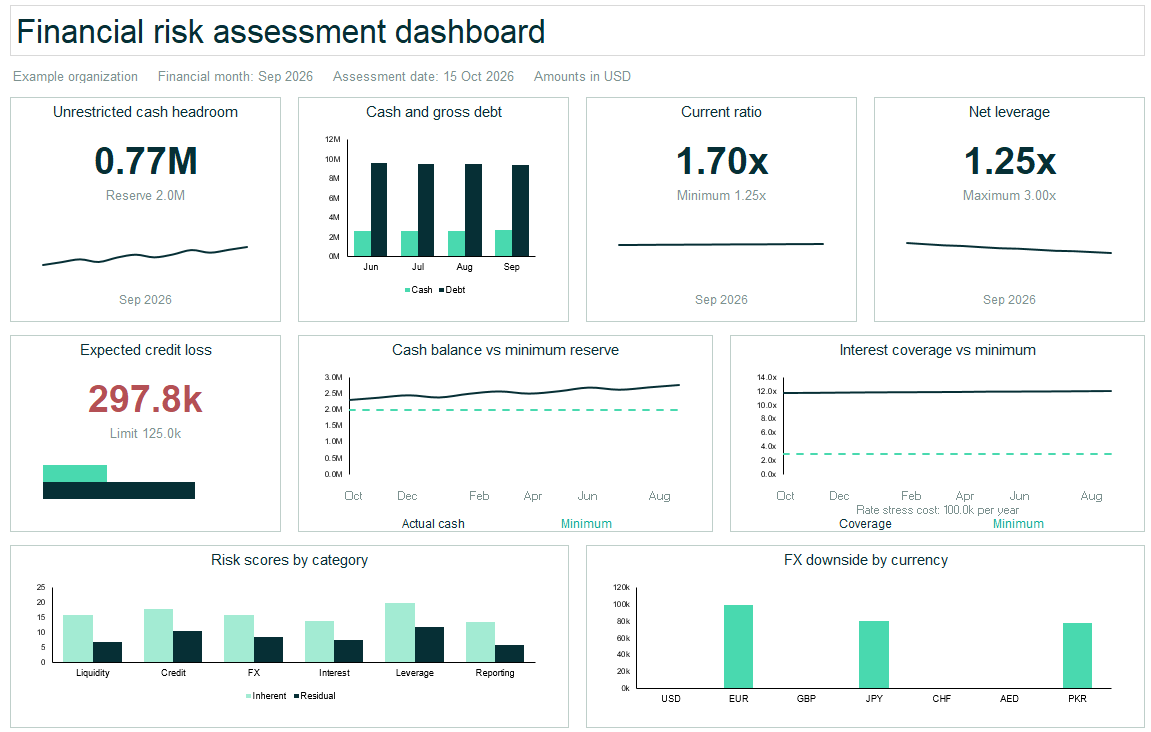
A financial risk assessment translates a defined uncertainty into a measure that finance and an operating team can both verify. Name the decision first. If payroll and suppliers must be paid this month, a forecast of cash by payment date is more useful than a single margin percentage. Separate opening cash, expected receipts and scheduled payments. Show amounts in a consistent currency and state when each amount becomes available.
Work through a delayed receipt
A service business has 120,000 in available cash. Approved payments of 150,000 fall due on the same day. Before that date, it expects 55,000 from one major customer and 20,000 from other customers. If both receipts clear, closing cash is 45,000. If the major customer pays one week late and the other receipts arrive, the business faces a 10,000 shortfall on the payment date. Both scenarios can show the same revenue for the month.
Use the bank balance available for payment, excluding restricted funds. Check whether the forecast already counts the delayed invoice within another cash line. Compare its expected date with actual settlement experience and ask the account manager for a documented customer update. Retain the assumptions as they stood when management made the decision.
Decide before the cash is needed
Model response options using their own timing and limits. A proposed credit facility contributes cash to this scenario only when it is approved, drawable and available by the due date. A discretionary purchase can be moved only if its terms allow that change. Have the treasurer identify which action is feasible and the latest date at which it can cover the gap.
Use scenario analysis to examine a simultaneous delay from several customers. If concentration repeatedly drives the shortfall, describe the underlying dependency in the enterprise risk register. At the next review, reconcile forecast receipts to actual bank entries and distinguish timing errors from invoices that have become uncollectible.