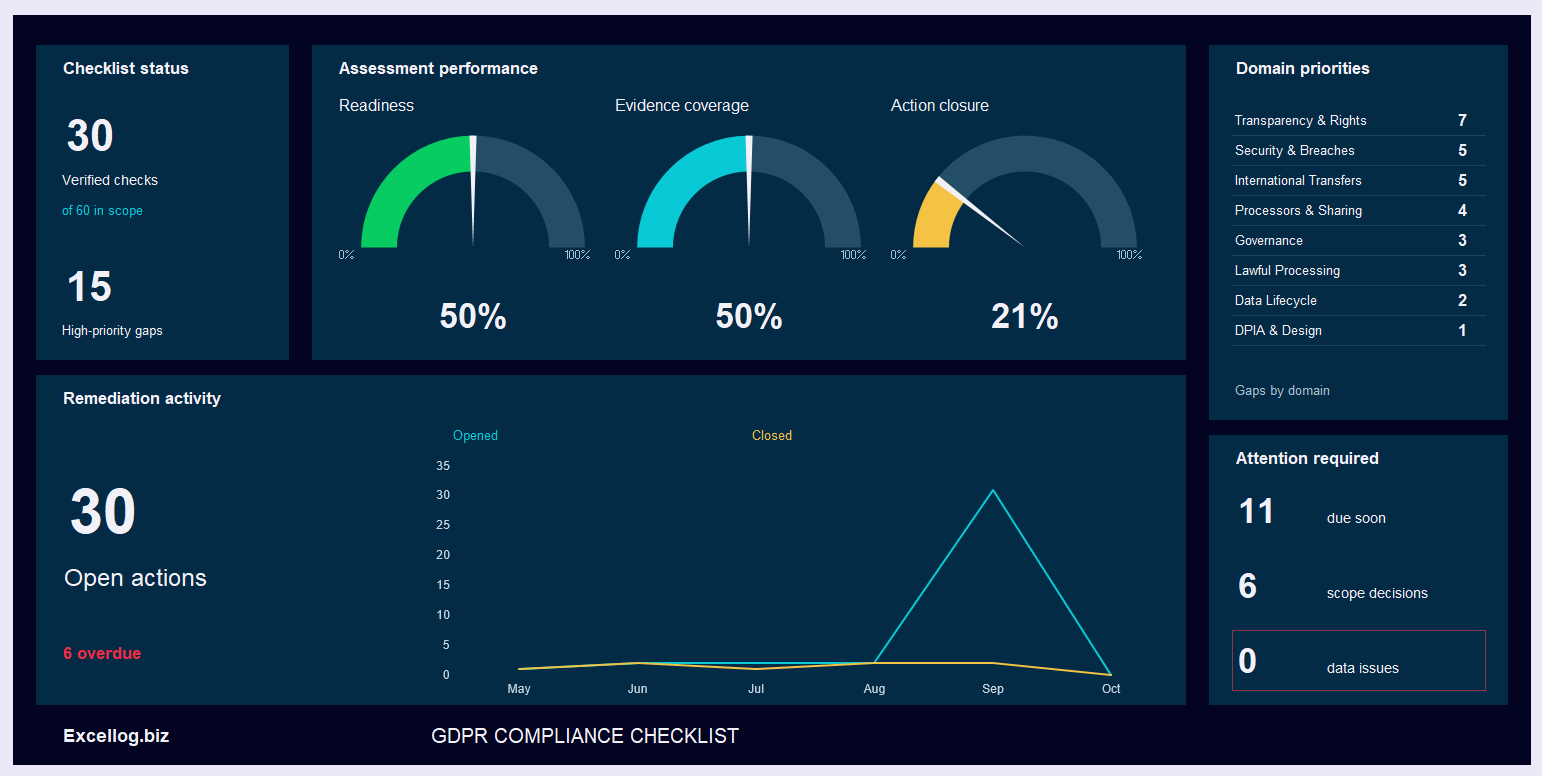
A GDPR compliance checklist works best when it follows one use of personal data from collection to deletion. Confirm that the EU GDPR applies to the activity and identify the organisation’s role for that processing. A business can act as controller for one purpose and processor for another. The details of the processing and the parties’ responsibilities determine which questions belong in the review.
Trace the information beyond collection
Consider a support centre that records calls to resolve disputes and wants to reuse selected recordings to coach agents. Document the two purposes, whose voices are captured, the categories of data in the recordings, access arrangements, recipients and retention decisions. Establish the lawful basis for each use and review what callers and workers are told. Check whether recordings may capture special-category information and whether additional conditions or safeguards are relevant. Record legal review where the basis or proposed reuse remains uncertain.
Reconcile the stated policy with the actual service
The centre’s internal rule says that recordings are removed after an approved period. A walkthrough finds that the phone system deletes on schedule, but supervisors keep exported clips in a shared coaching folder. Verify the owner and access list for that second location and establish whether the same retention decision applies. Record the action and evidence needed to confirm deletion there, including how to handle lawful retention exceptions. A policy text alone cannot demonstrate what happened to a particular copy.
Examine how a rights request would reach both locations and how staff would locate relevant material without disclosing someone else’s information. Screen proposed changes for privacy risk. Where new processing is likely to pose a high risk to people’s rights and freedoms, the controller must carry out a data protection impact assessment before processing begins. Revisit an existing assessment when the risk of the processing changes. Record any resulting contractual or operational duties in the obligations register.
Keep evidence proportionate
Give each checklist item an owner, source, decision and next review trigger. Use references to restricted evidence instead of copying personal data into a broad working file. Reopen the review when the vendor, processing purpose, recipient or retention practice changes. The result should identify a specific decision that the controller or processor can act on.