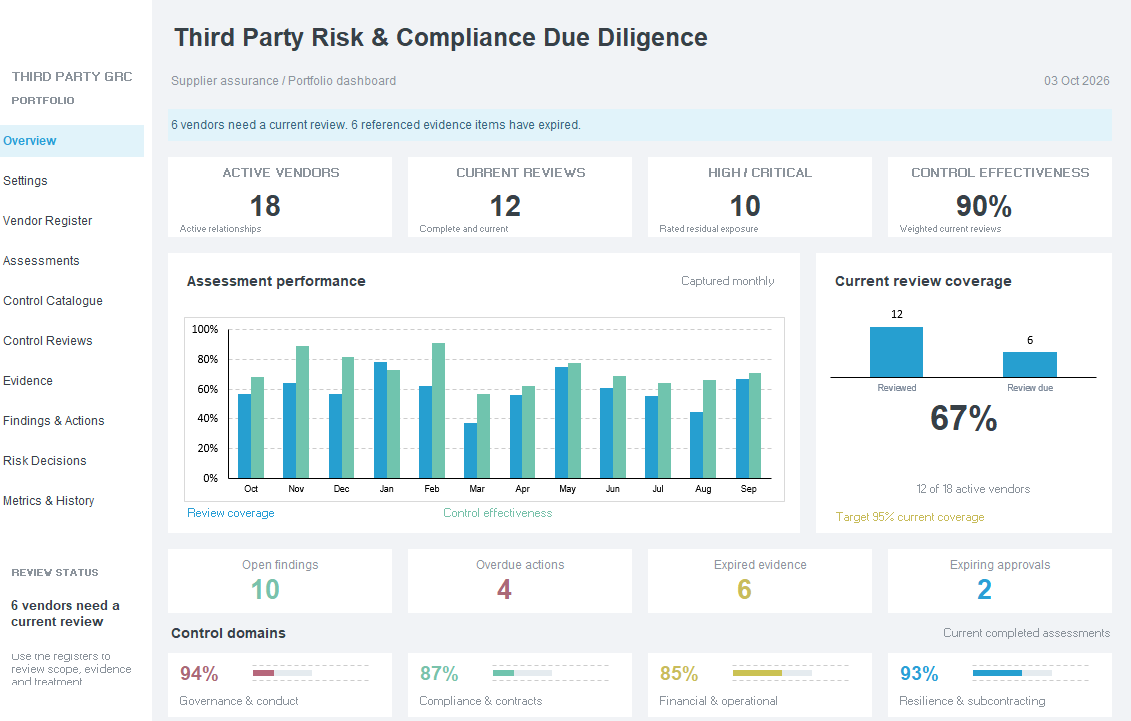
Third party risk and compliance due diligence helps a buyer decide whether to engage a provider, under which conditions and with what ongoing checks. Begin with what the proposed supplier will actually do. Record the service owner, information shared, operational dependencies, subcontracting arrangements and exit options. Each answer should influence the depth of review.
Match evidence to the decision
For an information and communications technology supplier, NIST’s due diligence guide offers prompts on matters such as provenance, resilience and supply chain tiers. Tailor requests to what could interrupt this purchase or affect its users. Ask what an assurance report covers, which period it addresses and whether an important subcontracted service sits outside its scope. Give documents an evidence reference and set a follow-up date for unresolved questions.
Have procurement record the business rationale, the proposed supplier, any declared conflicts and who can accept an exception. A conditional approval needs a boundary that the implementation team can recognise when it prepares the purchase order.
Make a pilot approval enforceable
An association wants a provider to process exam registrations for 8,000 learners. The supplier describes a system restoration test, but the report excludes a subcontractor that sends admission notices. The review team asks for evidence of a notice delivery test and the alternative delivery procedure. The supplier can demonstrate the process in a pilot covering 50 internal test registrations.
Procurement approves that limited pilot using test records and makes full deployment contingent on a witnessed end-to-end test, a named outage contact and agreement on how to return registration data at exit. The service owner records who must sign off and what happens if the supplier misses the decision date.
Set a review trigger for a change in subcontractor or service scope. Carry the shared mailing dependency into the supply chain assessment and route questions on the handling of learner data to the privacy assessment where the screening decision calls for one.