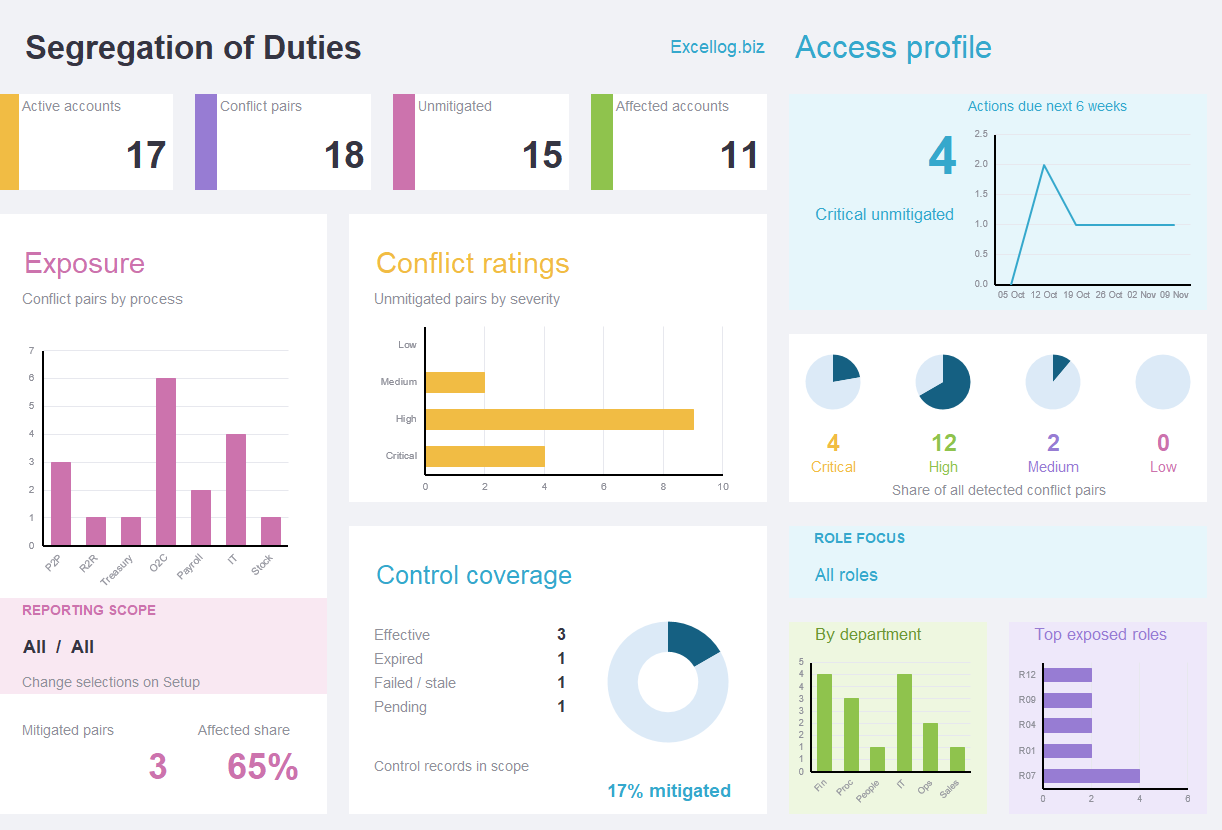
A segregation of duties matrix identifies combinations of activities that allow one person to initiate, complete and conceal an error or unauthorized transaction. Start with an outcome that matters, such as paying a genuine supplier for goods received. Then work backwards through the actions that could defeat that outcome.
Compare actions at transaction level
List the abilities to create a supplier, change bank details, enter an invoice, confirm receipt, prepare a payment and release it. For each potentially incompatible pair, capture the consequence, affected process, preventative restriction, control owner and evidence expected. A role name such as “accounts supervisor” is too broad until the team knows which actions it permits.
Identify dangerous combinations across applications as well. A person might change supplier details in one system and release a bank payment in another. Check temporary cover, delegated approval and manual routes. Keep the rationale for an acceptable pairing, including any scope condition that makes it safe in one unit but risky in another.
Follow a supplier bank change into payment
Suppose one clerk can amend a supplier’s bank details and select invoices for a payment run. A separate cashier releases the file but only sees the payment total. A second signature on the total gives little evidence that anybody checked the changed destination. Classify the combination according to the exposure the team actually faces.
A process owner might restrict bank changes to another role or require independent verification of changed details before release. In a small office using the second option, specify who uses an established contact channel, where confirmation is retained, and how affected payments are held pending review. Test a recent change and a payment made to the same supplier.
Match the design to actual permissions
Use the access and duties review to compare this conflict rule with real users and their effective permissions. Assign each exception an owner and expiry. Enter the operating test in the control testing tracker. A well-designed rule earns confidence when a reviewer can trace its operation through an actual transaction.