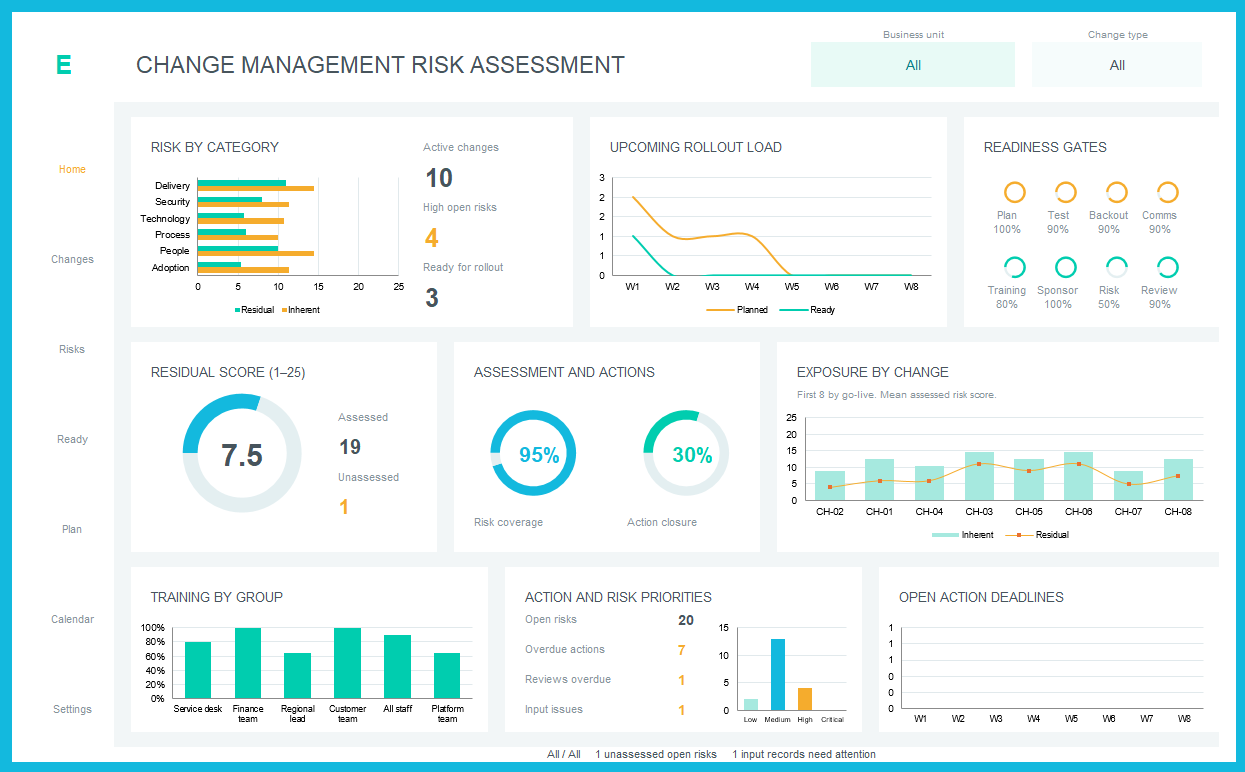
A change management risk assessment asks what could stop people from adopting and sustaining a new way of working. Identify the behaviour that must change, which teams perform it, what they need at the moment of use and how supervisors will recognise a problem. Completing training is evidence of participation. Observing a task under normal operating conditions gives a different kind of evidence.
Compare the workflow before and after the change
Map the existing and proposed handoffs. Record changed decision rights, access requirements, training needs and work that might move to another shift. Ask the affected teams which exceptions they encounter and what happens when the usual approver is unavailable. A pilot that covers only simple transactions can miss the very cases that put adoption at risk.
Define the rollout decision in advance. State what should pause expansion, who can authorise a temporary fallback, what evidence will be captured during the pilot and who is responsible for resolving gaps. Agree how the fallback will preserve a single reliable record of work.
Learn from the shift that has least support
A returns team pilots a new approval process. Its local expansion rule requires each shift to complete at least nine of ten observed returns without supervisor intervention, with all required checks recorded. Day shift completes ten of ten. Evening shift completes six because temporary staff cannot reach the approval queue. The aggregate figure of 16 out of 20 would conceal the difference between shifts.
The rollout lead keeps the change within the pilot, assigns queue access to the application owner and schedules ten fresh observations on evening shift. The supervisor also verifies that the access change preserves the required separation of duties. Expanding becomes a new decision after the evening team meets the criteria and the control checks are complete.
Record the access fix, fallback arrangements and decision date in the project risk register. Once the process has settled, check whether staff continue using an old workaround. Persistent parallel processes can undermine reporting even after training and launch are complete.