A fraud risk assessment examines where intentional deception could affect an objective and how management would prevent, detect and respond to it. Scope the review to a defined process and period. Ask who authorises transactions, who can change underlying records and who independently reviews the outcome. The U.S. Government Accountability Office’s fraud framework provides a public-sector reference for structuring such a review.
Build a testable risk statement
Start with the objective, the potential adverse event, the exposed population and the consequences. Identify which existing controls are expected to address the event. For each, name the person who runs it, the evidence it leaves and the person who can check exceptions independently. Distinguish errors, potential warning signs and substantiated cases when reporting results.
Read the segregation of duties matrix for overlapping responsibilities. Then verify actual permissions and observed approvals for the population within scope. Published role descriptions can lag behind changes in staffing or temporary cover.
Examine a payment exception without prejudging the cause
A grant administrator reviews a quarter with 240 reimbursements. It selects all 12 payments that used a documented exception route and tests whether the required independent review was recorded. Two files lack evidence at the review cutoff. The analyst records two evidence exceptions among the 12 selected files. This targeted test does not establish a fraud rate for all 240 reimbursements.
The controller requests the underlying records through the approved channel, assigns someone independent of the original approvals and gives the team a date to resolve the evidence gaps. Case material stays in the restricted investigation system. The risk assessment tracks the control concern, its owner and the decision needed.
Retest the exception route after changes have operated through another payment cycle. Use the control testing tracker to preserve population selection and results and the corrective action tracker to assign follow-up where the control failed. Keep the evidence needed to distinguish a recordkeeping gap from a confirmed failure.
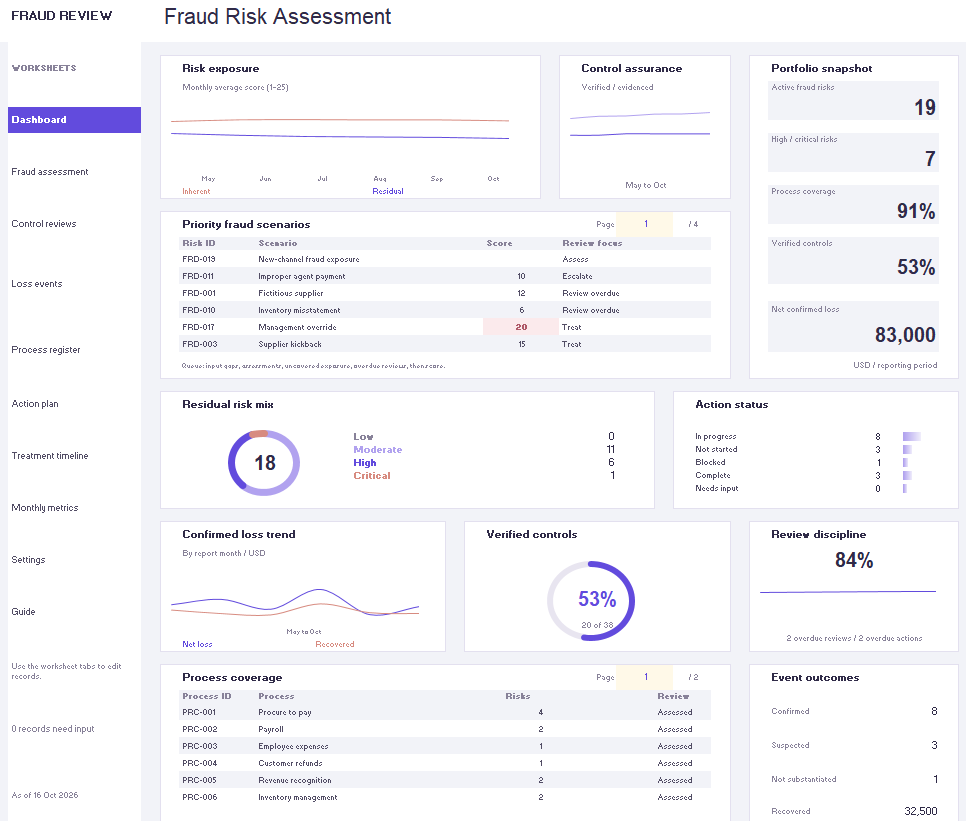
View Full Product Details – Fraud Risk Assessment Excel Template