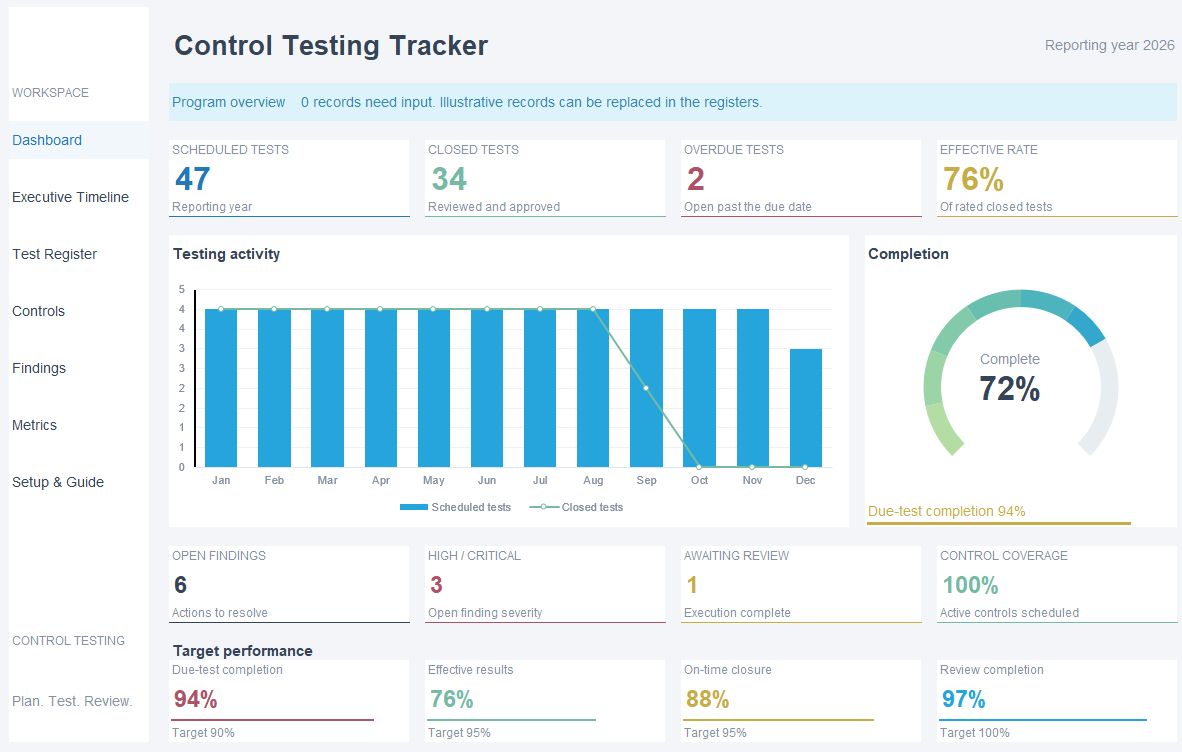
A control testing tracker records the question, procedure and result for each control under review. Before choosing a sample, decide whether you are evaluating control design, its operation during a period, or both. For design, ask whether the specified action could address the risk. For operation, ask whether the right people performed the action consistently, at the right time, for the transactions covered by the test.
Define the population and failure criteria
Write the control objective in terms an unfamiliar reviewer can observe. For a payroll rate change, the criterion might be an authorised approval dated before the change took effect. Identify the period, payroll system, transaction types and source used to produce the population. Reconcile its count or total to an independent record where possible. Document the selection method and why it fits the objective. A risk-based selection of unusual items can answer a different question from a representative selection across the population.
Investigate an exception before completing the result
Suppose a payroll report shows 48 rate changes. The testing team examines eight higher-value changes and finds one approval recorded the day after the effective date. Retrieve the source record and establish whether the timestamp reflects a late approval or a later upload of a timely original. If only the late approval exists, record the deviation, affected transaction and potential consequence. One exception in a targeted selection justifies investigation. The selection method limits how far the team can generalise from that result.
Record whether the control owner identified similar changes and whether another review addressed the same risk. Link the material through the audit evidence tracker. Use the corrective action tracker for ownership and follow-up if the exception points to a control problem.
Leave a reproducible conclusion
End the test with the population, work performed, limitations, results and reviewer sign-off. Keep missing evidence visible. If a later investigation changes the outcome, retain the previous conclusion and describe which new information changed it. The next test can then target the exact condition that failed.