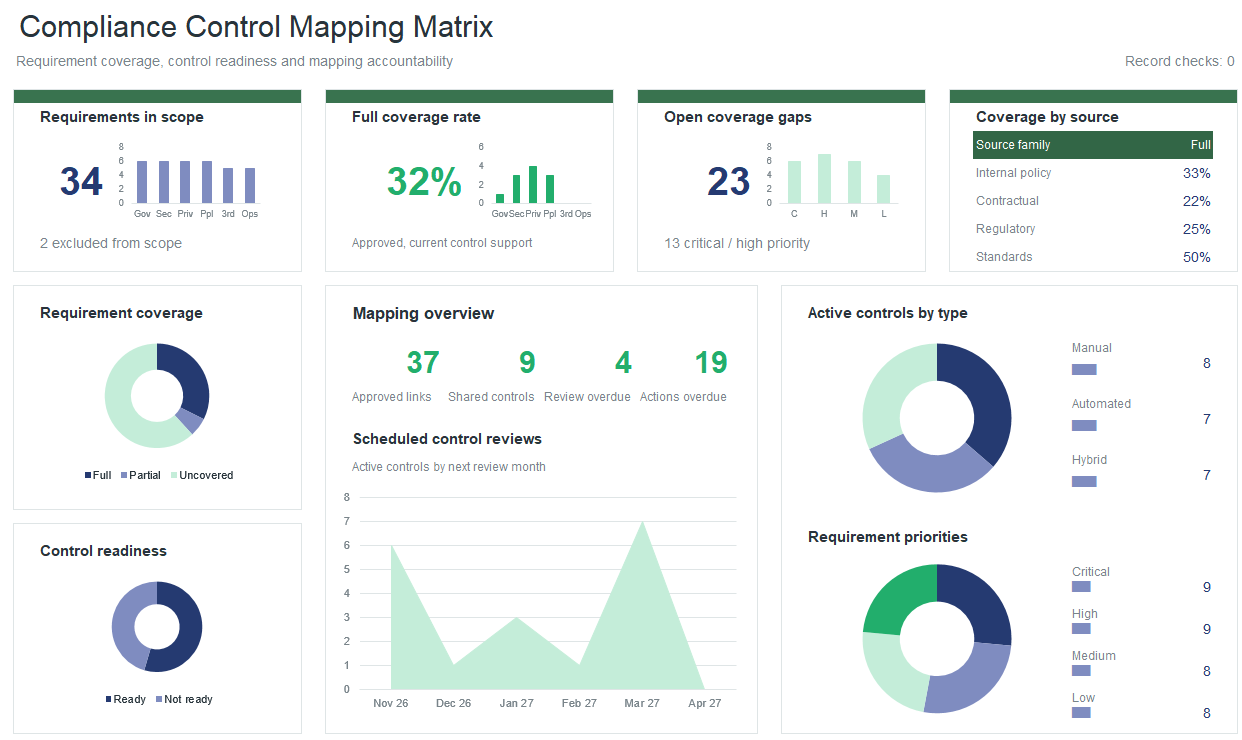
A compliance control mapping matrix connects a requirement with the activities intended to satisfy it. A reviewer should be able to travel in either direction. Starting from a requirement, they can identify the control owner and evidence. Starting from a changed control, they can identify which obligations may need reassessment. Give requirements and controls stable IDs so a new title or system name does not break that relationship.
Map the actual condition that triggers the control
Split an obligation into parts when its conditions, owners or evidence differ. For each relationship, record the entity and process covered, the control action, frequency or trigger, owner and expected evidence. Include a coverage judgment with a sentence explaining why the relationship is complete, partial or awaiting confirmation. A requirement can depend on several controls, and a single control can support several requirements. Keep the mapping decisions distinct even when they point to the same control.
Trace a gap in a notification process
Consider a contract requiring notice to a client whenever a critical subcontractor changes. Procurement reviews newly onboarded suppliers and obtains the required approval. The team initially maps that review to the whole contract requirement. A walkthrough finds that existing subcontractors can move into the critical tier without passing through onboarding. Those changes also trigger the contract provision, yet the mapped control misses them.
The owner records partial coverage, identifies the uncovered change event and proposes a review of criticality changes. The changed process should retain the classification decision, time the notification was due and acknowledgment of delivery. Use the original obligation record to confirm the exact recipient and any agreed method of notice. Then use the control testing tracker to test one new supplier and one existing supplier that changed tier.
Maintain the relationships after redesign
When replacing or combining controls, review the list of obligations that depended on the old activity. Record the last operating date of the previous control, the first operating date of its successor and any coverage gap between them. This history lets an assurance reviewer select the right evidence for transactions on either side of the change.