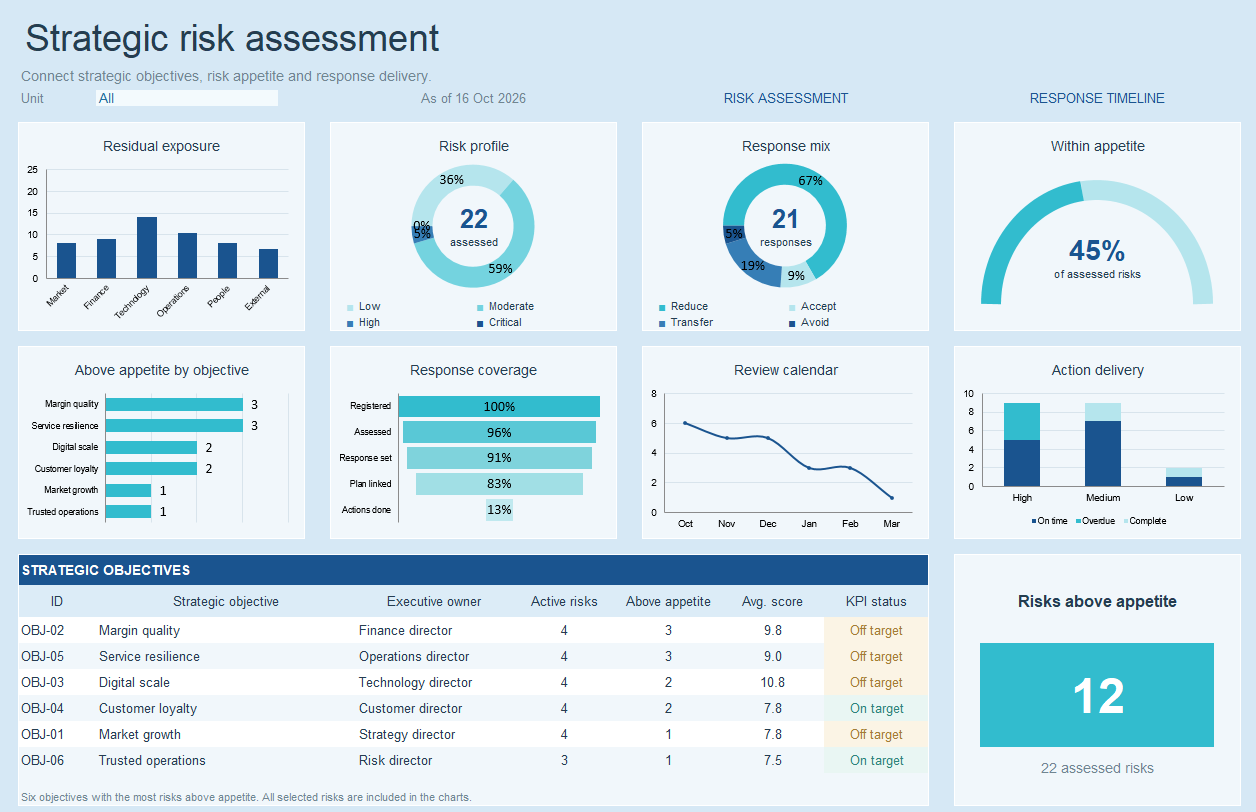
A strategic risk assessment examines uncertainties that could change the value of a strategic choice. Begin while leaders can still change direction. Write down the objective, the realistic alternatives and the assumptions that would make each alternative worthwhile. A proposal to increase sales by opening new locations carries different risks from a proposal to increase sales through existing partners.
Compare the assumptions behind two options
A repair network wants to cut customer waiting time in a new region. It could lease a depot immediately or start with partner workshops. The standalone depot needs 90 repairs a week to cover its assigned fixed costs. Partners report potential demand of 120 repairs a week, but 40 of those jobs come from one customer whose renewal is pending. On the supplied figures, losing that customer would bring anticipated demand to 80, below the stated break-even volume.
Record the volume estimate, its source, the leasing deadline and the manager authorized to commit the organization. Ask whether the partner can supply actual paid repairs by week and identify volumes already served elsewhere. Explore how poor service or a shortage of trained technicians could weaken either option. A calculation based on promised work needs a date at which the assumption will be tested.
Design a decision that preserves options
The team could use a time-limited partner pilot, then reconsider the lease once paid demand and achievable service times are visible. Set the observation window, minimum evidence and decision date in advance. Identify which costs become irreversible when the lease is signed. If two options have different benefits, give each option’s service outcome as much space as its financial exposure.
Link a material customer dependency to the enterprise risk register. Use a board decision record to preserve the approved option, conditions and basis for reconsideration. At the next strategy review, compare actual demand and repair time with the assumptions that supported the choice.