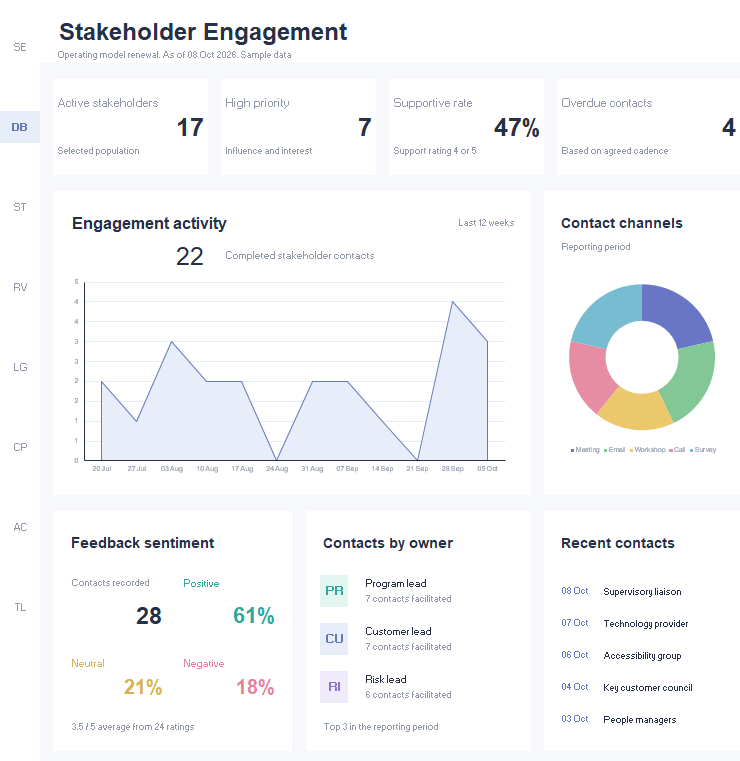
A stakeholder engagement register preserves what people raised, how their input changed a proposal and which commitments still need a response. It is particularly valuable where the team making a decision differs from the people who must live with it. An attendance list can tell a manager who came to a meeting. A register can explain why a service plan changed afterwards.
Identify affected groups and the decision window
Write down the decision, what is open to change and when input must reach the sponsor. Identify people affected directly, representatives, delivery partners and groups that the usual channels may miss. For each group, note the impact, preferred contact method, engagement owner and practical barriers to taking part. Collect only the personal details necessary to follow up.
Give each issue a short identifier. Attach the concern in the speaker’s terms, the team’s response, the decision owner and the date for reporting back. One discussion may produce several distinct issues. Several people may also raise the same issue in ways that reveal different impacts.
Consult before changing a dispatch schedule
Imagine a warehouse plans to move its first dispatch from 7 a.m. to 6 a.m. A daytime meeting reaches 12 supervisors but none of the eight loading staff on the night shift. The engagement owner arranges a handover conversation and a written response route. Three workers identify a clash with the first bus. A neighboring business raises a separate concern about reversing vehicles before opening.
Record the transport and noise issues separately. The operations manager pilots a staggered start while the facilities team assesses a quieter loading sequence. Each commitment gets an owner, due event and evidence from the trial. Record why any suggestion was declined so the response can be explained consistently.
Close the loop with the people affected
Share the decision in a channel each group can use. Log when the staff representative and neighbor received the response and whether new issues emerged. Link a material commitment to the relevant board decision or report overdue actions in the board dashboard. A commitment can close when the agreed action and communication have both occurred.