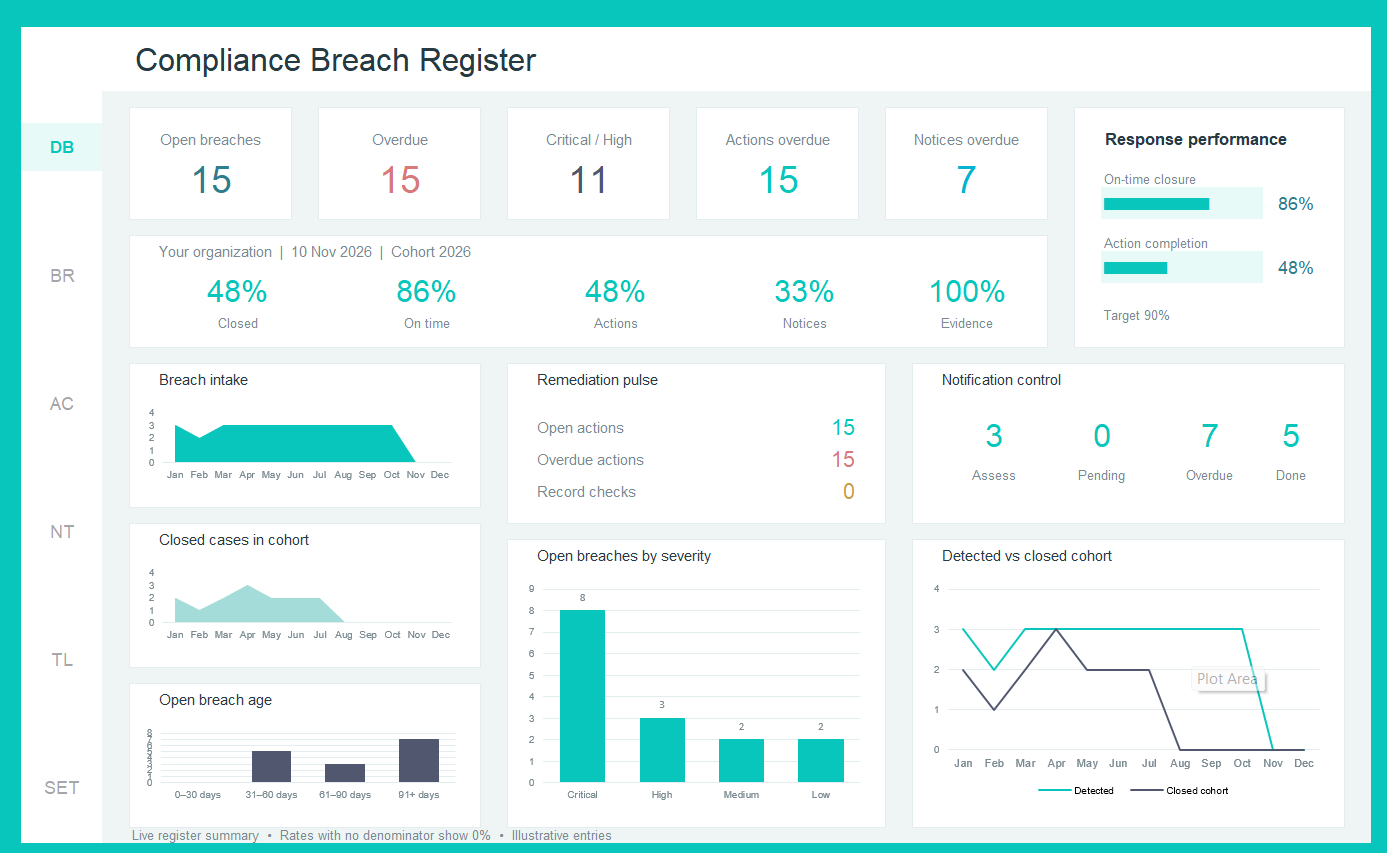
A compliance breach register tracks a potential failure from the first report through investigation, decisions and closure. The first entry should be useful even if the reporter has little information. Capture the report time, discovery time if different, process, affected entity, immediate facts and the person responsible for triage. Preserve the first account and use dated updates as new facts emerge.
Keep preliminary facts separate from findings
Use a case ID that can follow the matter through legal review, customer communications and remediation. Label assumptions and unconfirmed scope. Reference supporting material in a restricted location and record who may access it. If an event could trigger several reporting regimes or contractual duties, ask the appropriate decision maker to assess each one. Record the applicable trigger and time calculation for each decision. A single generic notification deadline can conceal duties that run on different clocks.
Follow a missed filing through to receipt
Suppose a business discovers on Tuesday that a filing due on Monday has no submission receipt. The preparer finds a saved draft and an email approving it. The register records the missing receipt, confirms the portal status with the filing owner and identifies when the team first became aware. A designated reviewer assesses the governing rule and decides the required follow-up. Once the authority accepts the submission, record the receipt reference and actual submission time. The approval email remains evidence of approval only.
Link the case to the original filing calendar entry so a reviewer can reconstruct the expected deadline. Investigation shows that both the preparer and approver assumed the other person would submit. Log a specific corrective action to assign a submitter and have a second person check the receipt.
Decide when the case is ready to close
The closure record should identify confirmed impact, decisions about affected parties, outstanding commitments, evidence of remedy and the authority accepting closure. Where the process fix needs another reporting cycle, keep the control action open under its own reference. This lets leadership see both the resolved filing and the remaining question of whether the revised handoff works consistently.