A risk control matrix links a business objective to events that can prevent it, then identifies the controls intended to address each event. A reviewer should be able to read across a row and explain how the activity would prevent a failure or detect it in time to act. Split a broad entry such as “purchasing controls” into the decisions people actually make.
Write a row that can be tested
Consider an organization that wants to pay only for quantities accepted at its warehouse. The risk is that accounts payable releases an invoice for goods that never arrived. Its control checks the purchase order, receiving record and invoice quantity. Identify the person or system performing the comparison, which invoices it covers, when it runs, how differences are held and who approves a documented exception.
A supplier invoices 120 units on an order for 120. The signed receiving record shows only 100 accepted. The purchase order and invoice match each other, while the receipt exposes a 20-unit discrepancy. A reviewer follows those 20 units through the hold queue and confirms who resolved them. If the team checked only that a signature exists, it would miss whether the control blocked the excess quantity.
Check coverage and evidence
List trusted sources for the purchase order, receipt, invoice and resolution history. Determine who can change the receiving entry after the fact. Record whether partial shipments, credits or emergency purchases use a different process. Use separate rows for materially different controls and assign stable identifiers where one control supports several risks. Give each row an evidence owner and a frequency matching how the activity operates.
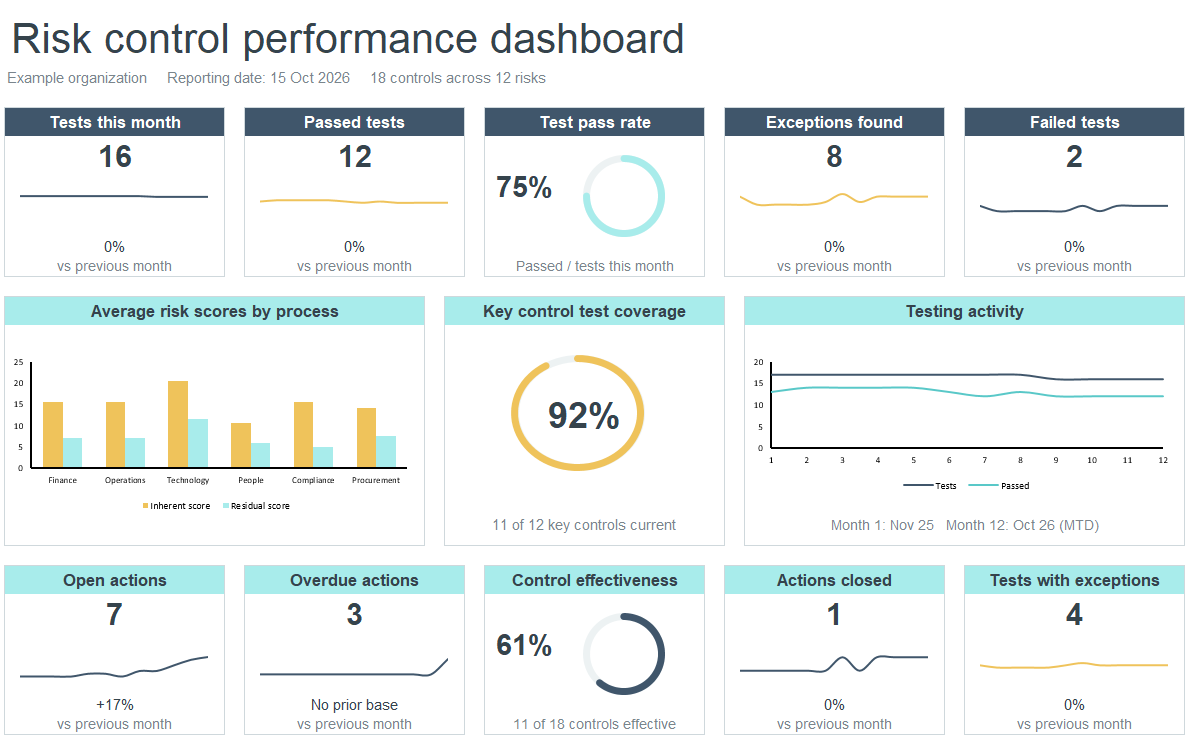
The control testing tracker can record a test covering released invoices as well as held ones. Track missing support in the corrective action tracker. Revisit the row when purchasing terms or receipt tolerances change. Otherwise a technically complete test could continue checking a rule the business has already replaced.