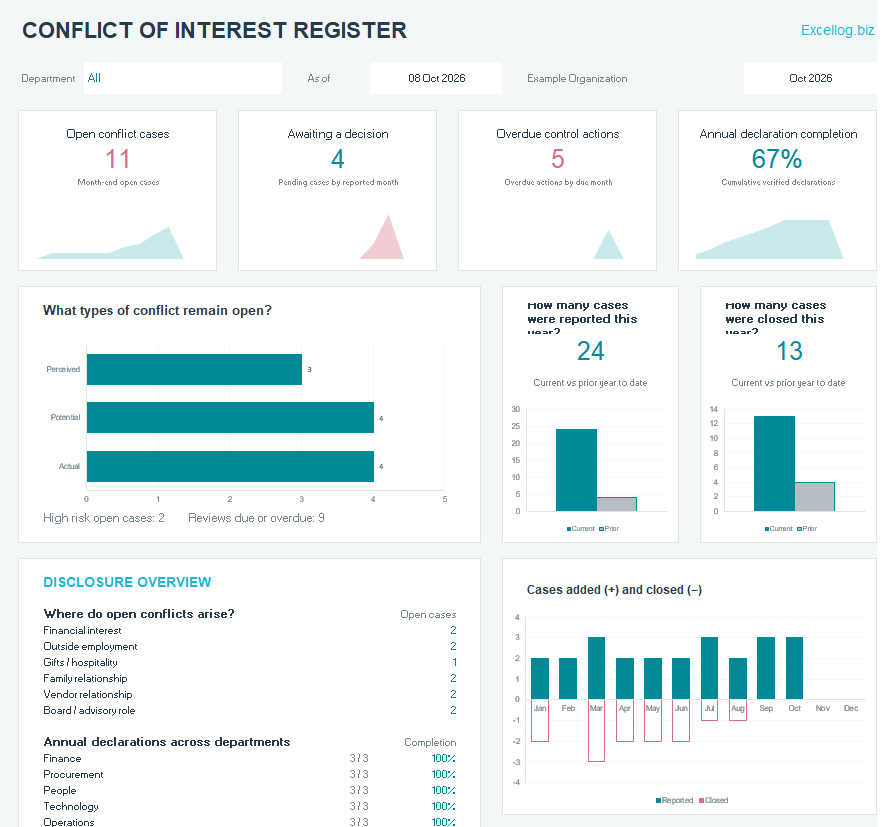
A conflict of interest register helps an organization handle situations where a person’s interests or loyalties could affect a decision they make for others. Its practical purpose is to give the chair, ethics officer or procurement lead enough information to choose an appropriate response before the decision proceeds.
Record the relationship and the decision it affects
Ask for the nature of the interest, the person’s role, the affected matter, when the interest arose and who assessed it. A standing declaration may cover a long-running relationship. An agenda review establishes whether that relationship matters to a particular decision. Give those records distinct references so a reviewer can see what was known when a supplier was selected or a grant awarded.
Use controlled access. People preparing the agenda may need to know that an individual must withdraw from one item. They may have no operational need to see personal financial detail. Document the basis for the handling decision and keep additional evidence in an appropriate restricted location.
Protect the independence of a tender panel
Imagine a five-person panel evaluating three bidders. A panel member declares that their partner is a senior manager at one bidder. The chair reviews the panel’s rules, appoints an authorized replacement and records which materials the original member had already seen. The member takes no further part in scoring or discussion of the award. The secretariat checks the remaining voting arrangements before the panel proceeds.
The declaration record identifies the tender, the relationship, the assessor and the action taken. The meeting record confirms withdrawal and the final decision makers. Where the original member had already entered scores, retain an audit trail of how the panel excluded or independently replaced those scores.
Recheck when circumstances change
Set an event for review, such as a contract extension or a change in the person’s duties. Close a matter when its handling is complete, retaining the history under the organization’s rules. Link the case to the decision record when the board was involved and use the authority matrix to identify a suitable alternate approver.