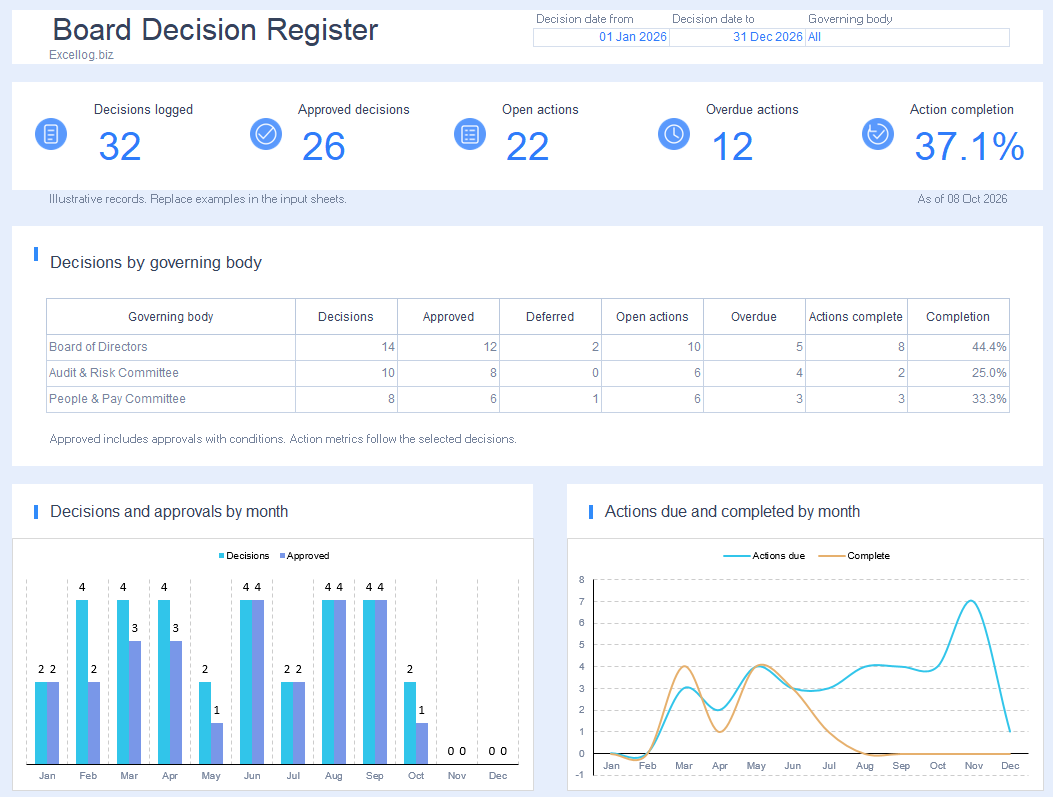
Months after a meeting, a company secretary may need to establish exactly what the board authorized. A board decision register keeps that answer within reach. Minutes provide the meeting record. A decision register gives directors and managers a way to find each resolution, its boundaries and any work still due.
Write the operative decision
Give each resolution a stable identifier and link it to the approved minute and supporting paper. Capture the deciding body, meeting date, action authorized, conditions, person accountable and due event. “Discussed renewal” describes an agenda item. “Authorized a one-year renewal up to $72,000 subject to a service review” tells the contract owner what they can sign. Keep sensitive supporting material in its controlled location and refer to it by record number.
A single meeting may produce a decision, two actions and an item deferred for more evidence. Give each action an owner while preserving its connection to the resolution. Use a distinct status for a deferral so the papers come back to the agenda.
Track a conditional release of funding
Imagine a board approves $120,000 for a pilot in two equal installments. The first $60,000 can be released immediately. The second requires the sponsor to demonstrate that at least 90 of 100 pilot cases met the agreed service target. Enter both conditions under one resolution, identify who verifies the result and link the evidence expected at the return meeting.
The sponsor later reports 88 qualifying cases. Mark the first installment released and the second awaiting direction. If directors approve a revised threshold, enter their new resolution and link it to the earlier one. Preserve the original threshold so a future reviewer can see what changed and when.
Bring outstanding decisions back to the agenda
Before circulating meeting papers, check unresolved conditions against the reporting cutoff and flag items needing board action in the board reporting dashboard. For delegated follow-up, compare the authorized action with the signing authority. Close the entry when there is evidence of execution and each condition has an outcome.